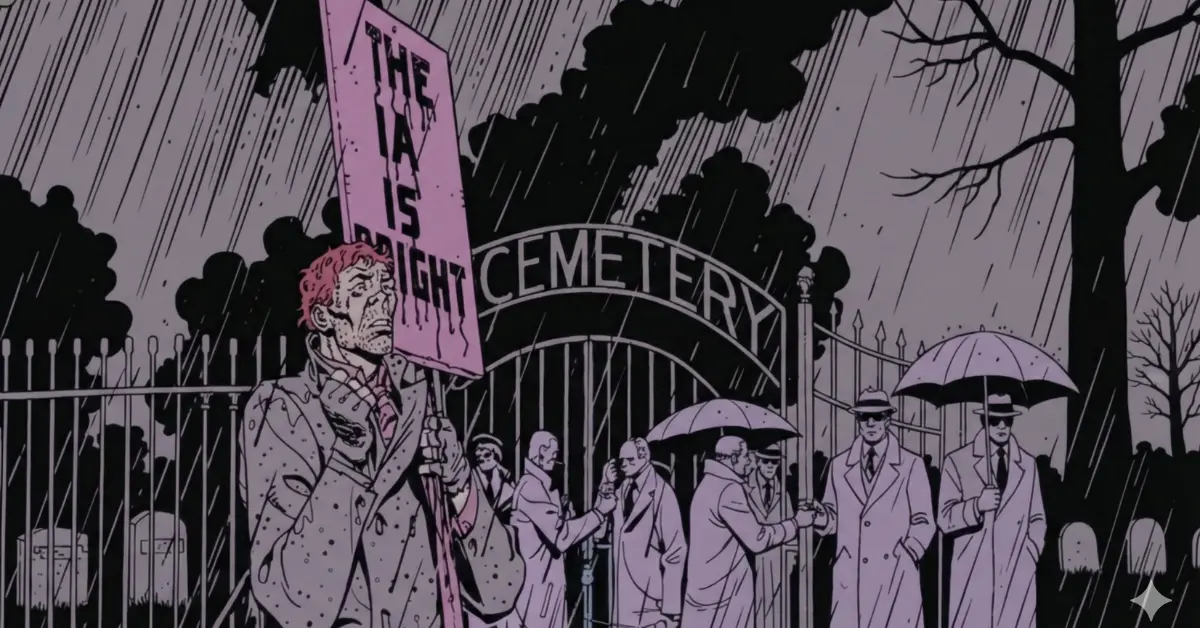
This question show up every year wearing a different outfit.
Before, it was:
low-code
no-code
cheap offshore labor
frameworks that “do everything”
Now it’s AI’s turn.
And as always, the fear isn’t irrational — it’s just misdirected. I won’t be a denier, nor an alarmist. This is a practical analysis, based on what’s already happening right now, not on marketing promises.
The mistake starts when we confuse code with work
Many people think a programmer’s job is writing code. It’s not.
Code is a byproduct. The real work of a programmer is:
understanding problems
translating business rules
making technical decisions
dealing with trade-offs
taking responsibility for failures
AI writes code. It does not take responsibility for consequences.
What AI already does better than many people
Let’s be fair. Today, AI is already excellent at:
generating CRUDs
writing repetitive code
creating basic tests
refactoring isolated snippets
suggesting implementations
This scares those who live only at this level. And here comes the uncomfortable part:
a large portion of the market lives exactly there.
Who is actually at risk
AI doesn’t replace “programmers.” It replaces profiles. From this perspective, those at risk are:
people who only execute tickets
those who copy and paste without understanding
those who depend on frameworks to think
those who cannot explain their own code
These people aren’t losing ground to AI. They’re losing ground to inevitable automation. And being brutally honest, fighting the “AI revolution” is like fighting the industrial revolution — it doesn’t work.
Who gains strength with AI
Now the other half of the story — and this is where it gets interesting. Gaining strength are:
developers who understand the domain
architects
true seniors
people who know how to say “no”
those who design before they code
For these profiles, AI becomes a force multiplier, not a competitor. In practice, a high-quality employee who doesn’t ask for equity.
AI still doesn’t build systems — it builds answers
A point almost no one talks about:
AI responds to prompts.
It doesn’t understand organizational context.
It doesn’t know:
why a rule exists
what level of risk is acceptable
what would break the business
who pays the price when things go wrong
Systems live inside human realities. AI does not.
The near future: fewer devs, more responsibility?
Yes, there will be fewer positions for trivial code, mechanical tasks, and context-free maintenance. But there will be more demand for clarity, predictability, architecture, and technical communication.
The market doesn’t want less software. It wants less chaos.
The real dividing line
The question isn’t: “Will AI take my job?” It’s: “Can I explain why my code exists?”
If the answer is yes, you’re safe. If it’s no… the problem isn’t AI.
How to prepare (for real)
Not by learning more frameworks.
But by learning fundamentals, business domain, code reading, clear writing, and simple design. And by using AI as an assistant, a copilot, an accelerator — never as an outsourced brain.
In conclusion, AI doesn’t replace professionals
It replaces improvisation, superficiality, and blind dependency. If you write code without understanding the system — yes, your job is at risk. If you build systems that people and businesses depend on — AI came to help you, not replace you.
The future doesn’t belong to those who type faster. It belongs to those who think better.